
Softer light, readable screens
Glare Reduction Window Film for Riverside Living Rooms and Offices
Glare is a light problem, not a heat problem, and it often shows up in rooms that are not even that warm. Glare reduction window film takes the harsh edge off incoming daylight, which lets you read a screen and stop squinting.
 Riverside
Where Glare Comes From in Riverside Homes
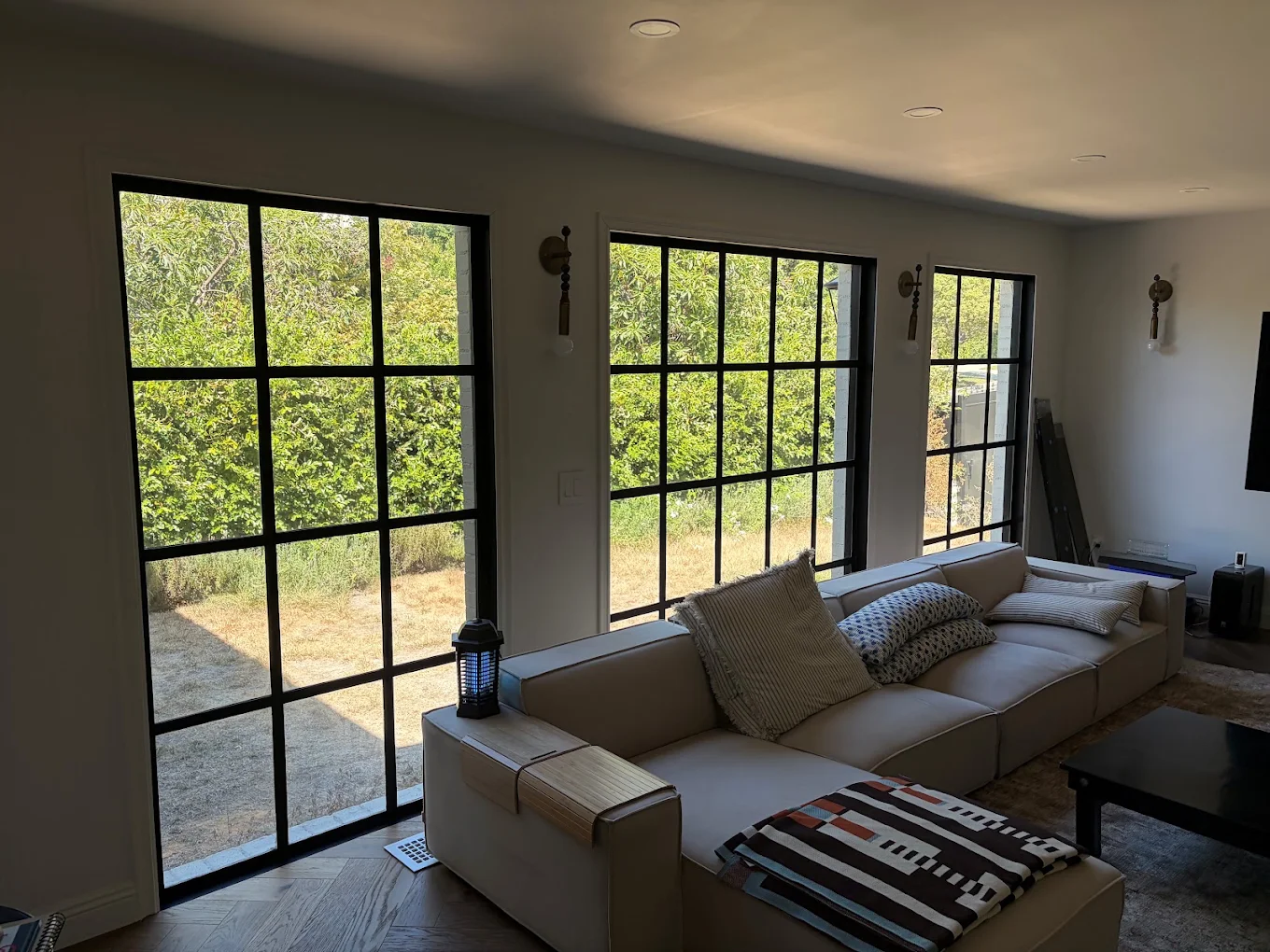
Direct sun is the obvious source. In winter, the sun tracks a shallow arc across the south, and in Riverside those winter days are often perfectly clear. Light that a roof overhang blocks in July comes straight across the room in January, landing on the TV, the kitchen island and the desk by the window.
Reflected glare is the less obvious source. Inland Empire neighborhoods are full of light-colored stucco walls, concrete patios, pool water and pale block walls. On a bright afternoon, those surfaces bounce sunlight back through north- and east-facing windows that never get direct sun. That is why some people have a glare problem in a room they would describe as shady.
How Glare Reduction Window Film Is Measured
The key number is visible light transmission, the share of visible light that passes through the glass and film. Clear glass lets most light through. A glare film with a lower rating cuts more of that brightness. The lower the number, the bigger the reduction in glare, but the dimmer the room becomes.
For most Riverside living rooms, a medium film is the useful middle ground. It takes the edge off the harshest light without making you turn on lamps at 2 p.m. Darker films make sense for media rooms, west-facing offices and bedrooms where people sleep during the day. Neutral gray tones keep colors looking natural, while bronze or reflective tones change how the outside view looks.
Glare Reduction Window Film for Riverside Home Offices
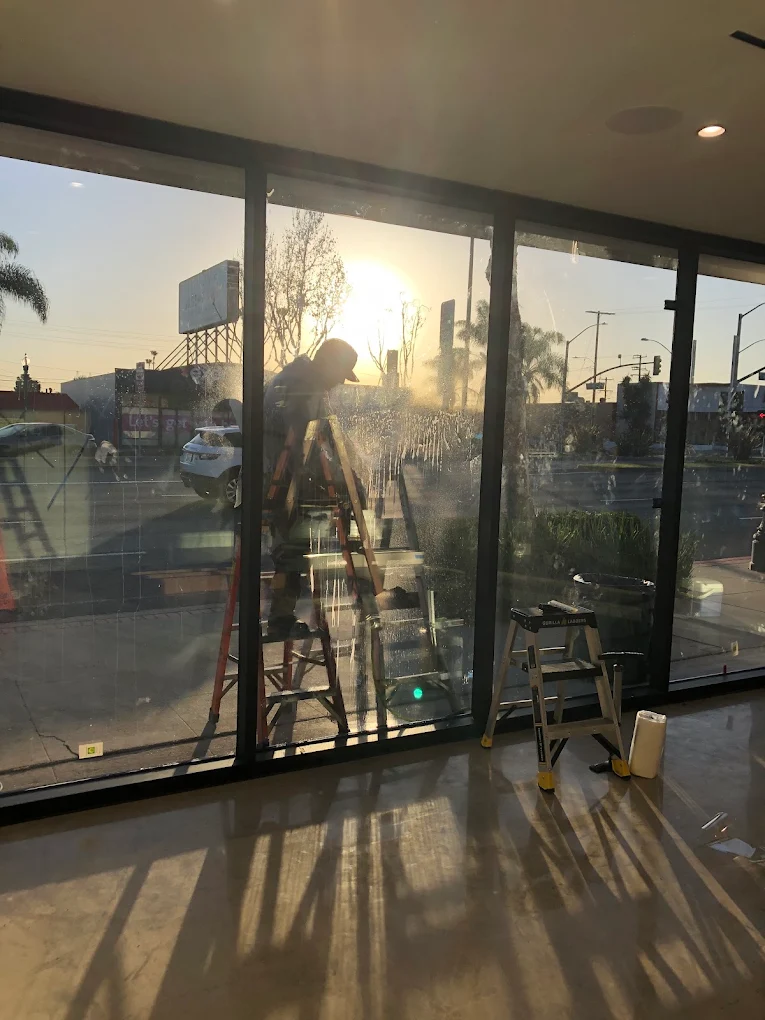
Remote and hybrid work turned plenty of Riverside guest rooms and great-room corners into offices, and many of those workspaces were set up wherever there was space rather than where the light is best. A monitor facing a west window or with a window directly behind it is a recipe for squinting and headaches by late afternoon.
Film on the offending window reduces the contrast between the bright glass and the darker screen. Combined with moving the desk a few feet or adjusting the monitor angle, it usually solves the problem. For video calls, film also stops the person on screen from appearing as a dark silhouette against a blown-out window.
Glare Film for View Homes in Canyon Crest and Hawarden Hills
Hillside homes in Canyon Crest, Hawarden Hills and parts of La Sierra often have large windows aimed at a view across the valley. Those windows take in a lot of sky, which is bright for most of the day. Glare reduction film takes some of that brightness off without hiding the view, and spectrally selective versions keep the color of the landscape close to natural.
At night, the trade-off changes. Reflective films show more of the room's own reflection after dark, which can compete with city lights in the view. For view windows, we usually recommend low-reflectivity films that cut daytime glare but stay quiet at night. We show how each sample looks at dusk when that matters.
Glare Reduction Window Film Benefits in Riverside
Glare Film for Readable TV and Computer Screens
Cutting the brightness coming through the glass lets screens compete again. The TV is watchable in the afternoon, and laptop work by the window no longer means running the screen at full brightness. Eye strain eases too.
Glare Film That Keeps the Room Daylit
A medium glare film reduces harsh light without making the room feel dim. You keep natural light and the view instead of closing blinds that block both. Most Riverside homeowners choose a medium film for living areas.
Less Reflected Glare From Stucco and Pools
Film on north and east windows that take bounced light from bright walls, patios and pool water reduces glare that direct-sun solutions often miss in Riverside neighborhoods. These windows are often overlooked because they never get direct sun.
Glare Reduction Window Film With Heat and UV Benefits
Nearly every glare product doubles as a UV blocker and trims a portion of solar heat too. On a west window, one product can address glare, fading and afternoon warmth together. That makes it good value on mixed-problem rooms.
Riverside Questions About Glare Reduction Window Film
How dim does a room get with glare film?
It reduces visible light by design, but how much is up to you. Light and medium films leave rooms bright enough for daytime use without lamps. We show samples in your room so you can see the difference first.
What is the best window film for TV glare?
A neutral medium film on the window that lights up the screen usually works well. If the TV faces a west window, a darker film or a reflective film may be needed during the late-afternoon hours.
Does glare film tint the view outside?
A neutral gray film makes the scene a shade darker while leaving colors true. Bronze and some reflective films add a warm or cool cast. Spectrally selective films change the view the least.
Can I add glare film to only one window in a room?
Yes, and that is common. Treating the single window that causes the problem keeps the rest of the room bright. Matching films across visible panes on the same wall avoids an uneven look from outside.
Can glare film help an east bedroom that gets blasted at sunrise?
Yes. Summer sunrise in Riverside comes early and bright, and an east bedroom can be fully lit well before the alarm. A darker film on that window softens the morning light. For true blackout, pair it with a lined shade, since film alone will not make a room dark.
Glare Reduction Window Film Service Areas in Riverside
Window film quote
Get Glare Reduction Window Film Pricing in Riverside
Take a photo of the glare at its worst time of day and send it with rough window sizes through the quote form. That shows us exactly what the film needs to fix.
Prefer email? info@windowfilmriverside.pro