
Solar heat, stopped at the glass
Heat Control Window Film for Riverside Homes
When it is 104 outside and the sun is pouring through a west slider, the air conditioner is losing a fight it cannot win. Heat control window film reduces how much of that solar energy gets into the room in the first place.
 Riverside
Where Riverside Houses Pick Up Heat Through Windows
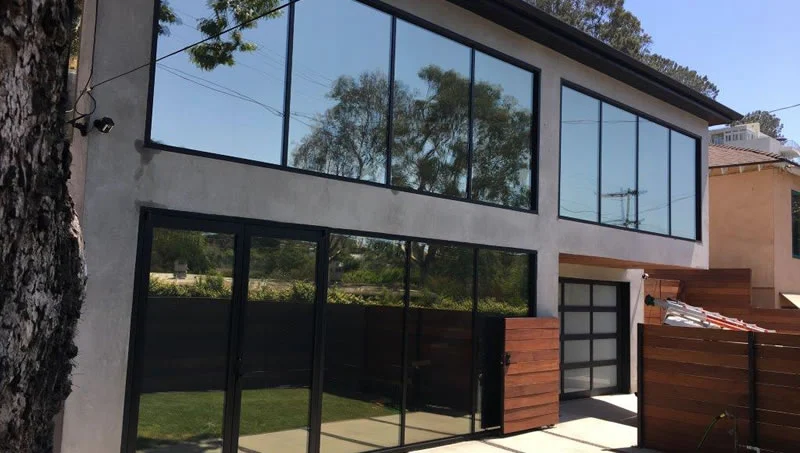
In most Riverside homes we visit, a small number of windows cause most of the overheating. The usual suspects are sliding glass doors facing a west backyard, tall great-room windows that run up to a second-story ceiling, and the upstairs bedrooms of two-story tract houses, which collect heat from both the roof and the glass. Kitchens with a big window over the sink and an afternoon view are close behind.
Inland summers make those windows worse than they would be near the coast. There is no reliable afternoon sea breeze, nights may stay warm during a heat wave, and the sun shines through clear skies for most of the cooling season. A room that gains heat from 2 p.m. to sunset never quite recovers before the next day starts.
That is why we ask which rooms are the problem and when it starts. A bedroom that is fine until 5 p.m. needs different film than a sunroom that is hot by 11 a.m. The answer tells us whether the film needs to favor heat rejection, light or both.
Choosing a Heat Control Film for Riverside Windows
Heat control films fall into a few families. A spectrally selective film passes the bulk of visible daylight and turns back much of the infrared, so a room stays bright and the glass looks close to clear. Reflective films, often with a light silver or neutral cast, reject more total solar energy but reduce light and show some mirror effect from outside. Ceramic and other nano-coated films sit between the two, with low reflectivity and solid heat rejection.
The numbers that matter on a spec sheet are total solar energy rejected and visible light transmission. A film with high heat rejection and low light transmission will feel cooler but darker. We put the options next to each other on your glass so you can see what a given number actually looks like at 4 p.m. on a Riverside afternoon. We avoid cheap dyed films for heat control. They absorb rather than reject much of the energy and tend to fade under constant inland sun.

Heat Control Film on Dual-Pane Windows in Orangecrest and Eastvale
Newer homes in Orangecrest, Eastvale, Menifee and Temecula usually have dual-pane glass with a low-E coating. Adding film to the inside pane changes how that unit handles heat. A dark, highly absorptive film can push the inner pane's temperature up, and on very large panes or panes partly shaded by an overhang, the uneven temperature across the pane makes a stress crack or failed seal more likely.
We check the glass before recommending anything. On most dual-pane low-E windows, the right answer is a film the manufacturer has rated for that glass, often a spectrally selective or lightly reflective product rather than the darkest option available. That still cuts heat noticeably on a west slider without putting the window at risk.
Heat Control Window Film for Older Single-Pane Riverside Homes
Craftsman bungalows in the Wood Streets, Spanish revival houses near downtown and mid-century ranch homes in Arlington and La Sierra often have single-pane windows. Plain single-pane glass offers almost no resistance to solar heat, so film makes a bigger difference here than on modern units. Expect the biggest improvement on the west side of the house.
Many of these owners want the house to look the way it always has from the street. A clear or very lightly tinted spectrally selective film keeps the windows looking like plain glass while cutting much of the infrared. Before installing, we check the condition of each pane and the glazing putty, since old glass with chipped edges should be repaired or left alone.

What Heat Control Film Can and Cannot Do in Riverside Heat
Film reduces the solar heat entering through glass. It does nothing for heat coming through an uninsulated attic, a hot west wall or leaky ductwork. If the whole second floor is miserable, attic insulation and ventilation may matter as much as the windows. Film is the right fix when the heat clearly tracks the sun moving across particular windows.
It also does not replace shade. Exterior shade screens, awnings and trees stop heat before it reaches the glass, which is more effective than any interior film. Film is the better choice where exterior shading is not allowed by an HOA, would block a view, or would not work on a tall fixed window.
What Heat Control Window Film Does for Riverside Homes
Cooler West Rooms on Riverside Summer Afternoons
Film cuts the solar gain that builds up through west sliders and windows between mid-afternoon and sunset. The room warms more slowly, the peak temperature drops, and you are not driven out of the family room every evening from June through September.
Less Air Conditioning Strain From Window Heat Gain
Reducing heat gain at the glass lowers the load on your AC during the hottest hours, so the system cycles less and has a better chance of holding the thermostat setting. Upstairs rooms that never quite cool down often see the biggest difference.
Heat Control Film That Keeps Rooms Bright
Spectrally selective films reject infrared without making the room dim. You can leave blinds open on a backyard or hillside view instead of closing everything up and switching on lamps in the middle of a sunny day.
Fewer Hot Spots Near Riverside Window Walls
Sitting next to a sunny window in summer feels like sitting next to a heater, because the glass and the floor in front of it radiate heat. Film reduces that, so the couch by the slider becomes usable again.
Heat Control Window Film Questions From Riverside Homeowners
How much cooler will my room be with heat control film?
It depends on the film, the glass and how much of the room's heat actually comes through the windows. Rooms where the heat clearly follows the sun see the most change. We show rated heat rejection for each option rather than promising a specific temperature drop.
Does heat control film work on a Riverside home without AC?
Yes, and it can matter more there. Without cooling, the only way to stay comfortable is to keep heat out, and film reduces the solar gain through the worst windows without blocking the view the way closed blinds do.
Will heat control film make my house too dark?
Not if you pick a spectrally selective or light ceramic film. Darker films reject more heat but cut light. Most Riverside homeowners settle on a light-to-medium film on west glass and leave north windows alone.
Can heat control film crack a dual-pane window?
It is uncommon when the film is matched to the glass. The risk goes up with dark, absorptive film on large or partly shaded dual-pane units. We check glass type and the film maker's compatibility guidance before installing.
Does heat control film block heat in winter too?
It reduces winter solar gain a bit, which you may notice on south windows. Riverside winters are mild, so for most homes the summer benefit outweighs that. A low-E film is an option if winter warmth matters to you.
Heat Control Window Film Service Areas in Riverside
Window film quote
Heat Control Window Film Quote for Your Riverside Home
Tell us which rooms overheat and about what time it starts, then add window sizes or photos to the quote form. We will start with the glass that does the most damage.
Prefer email? info@windowfilmriverside.pro